
Outdoor Furniture Design Trends for 2026
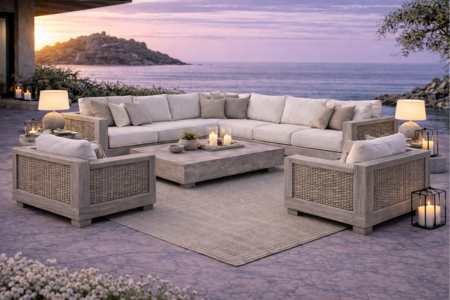
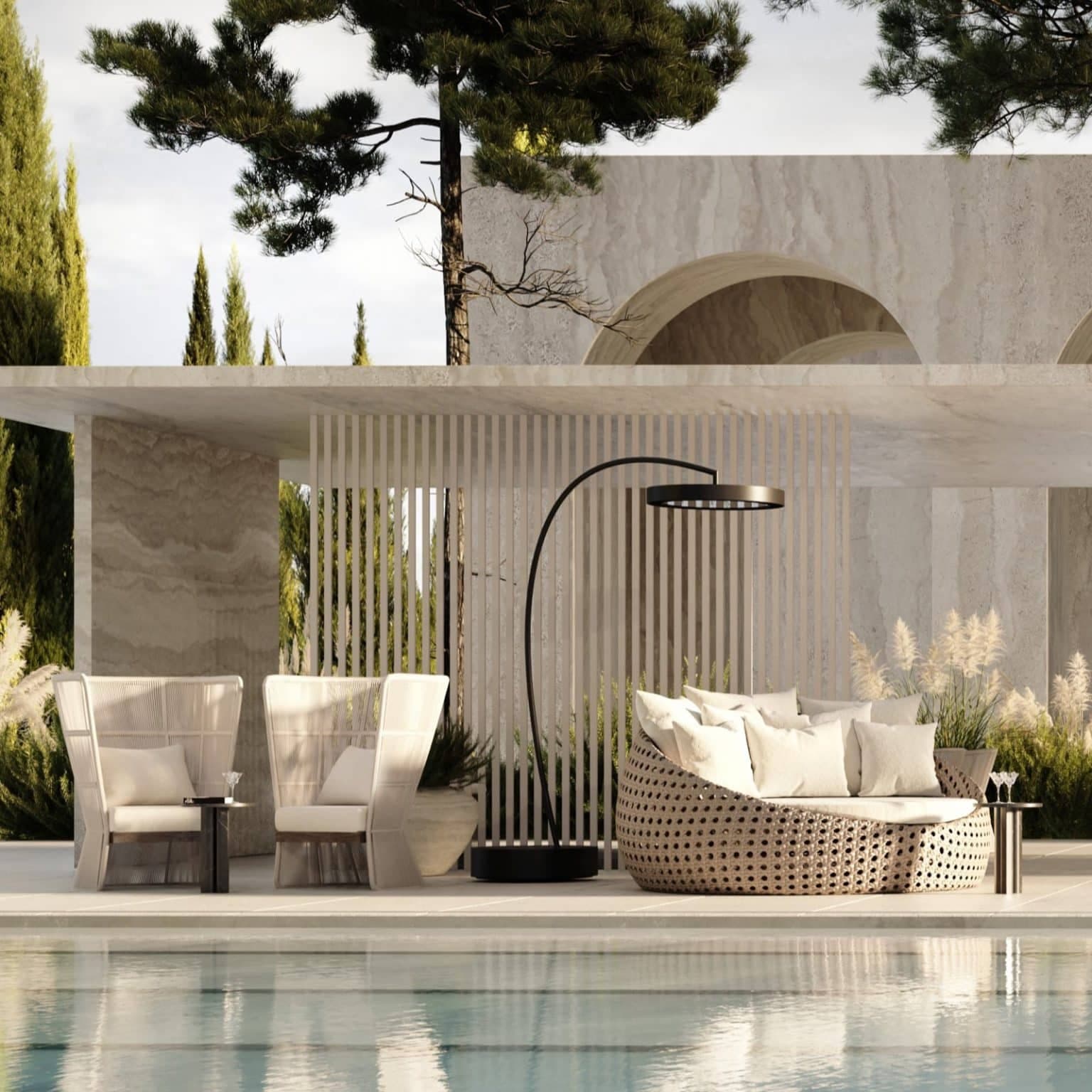
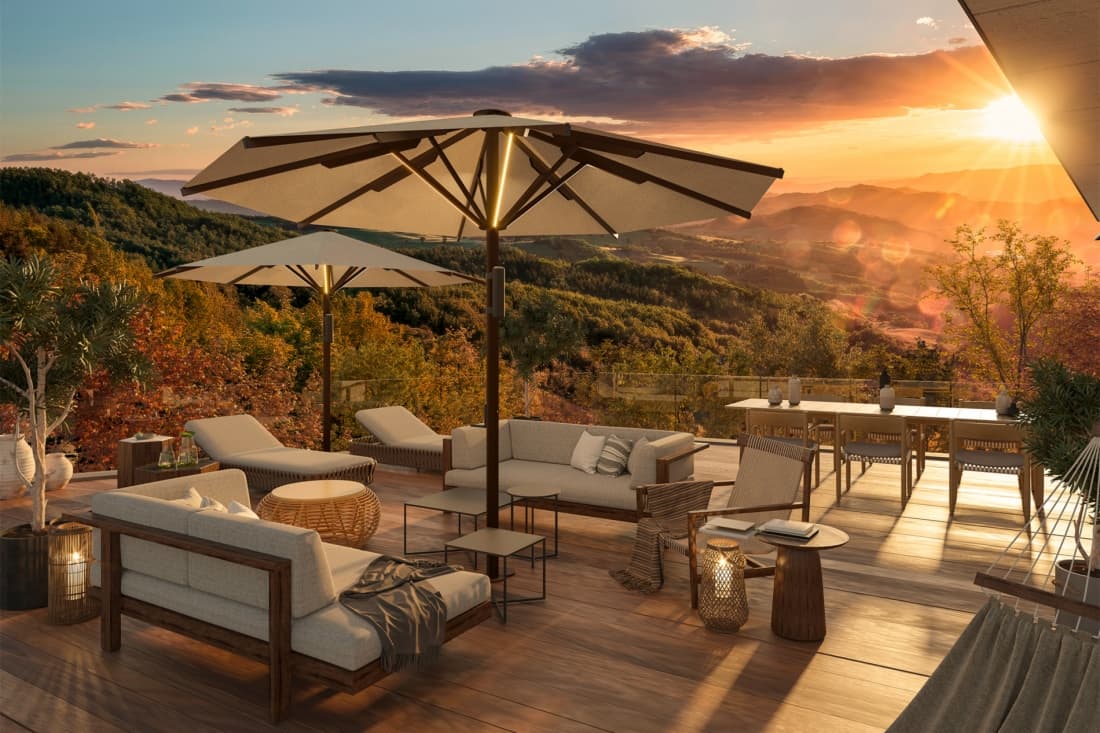
A sculptural sofa set low against limestone paving, a dining table with a softly textured ceramic top, an umbrella chosen to echo the facade rather than dominate it – this is where outdoor furniture design trends are heading. The shift is clear. Exterior spaces are no longer being furnished as separate leisure zones, but composed with the same discipline applied to interiors and architecture.
For private residences, boutique hospitality settings and marine projects alike, the most compelling schemes now favour continuity over novelty. Furniture is expected to sit comfortably within a wider material palette, to perform in demanding conditions and to feel considered from every angle. Trends still matter, of course, but in the luxury market they matter less as passing statements and more as signals of where design values are moving.
Outdoor furniture design trends are becoming more architectural
One of the strongest movements in high-end exteriors is the rejection of obviously seasonal furniture. Instead, clients and specifiers are choosing pieces with a more architectural stance – cleaner silhouettes, lower profiles and forms that feel anchored to their setting.
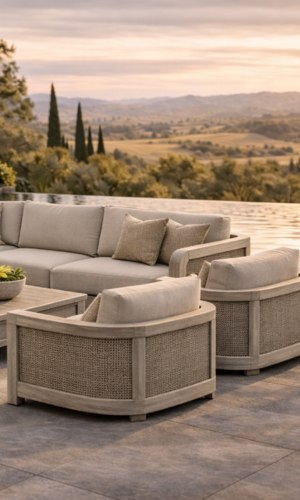
This does not necessarily mean severe minimalism. In fact, many of the most successful collections balance structure with softness. A generously proportioned outdoor sofa may have a disciplined frame in powder-coated aluminium or teak, then be relaxed by deep upholstery and rounded detailing. The result feels permanent rather than temporary, as though the furniture belongs to the building.
This is especially relevant where terraces, pool houses and garden rooms have been designed as direct extensions of the interior. In those settings, furniture that looks overtly casual or decorative can feel disconnected. Architectural pieces offer a calmer answer. They respect line, scale and proportion, which is often what gives an outdoor scheme its lasting appeal.
Softer forms are replacing rigid minimalism
After years of hard-edged outdoor styling, there is a clear preference for softer geometry. Curved backs, rounded corners, cylindrical legs and more enveloping seating are now defining luxury exteriors. The mood is less formal, yet no less refined.
There is a practical reason for this. Outdoor living has become more expansive. Spaces are being used for long lunches, evening entertaining and quiet daily retreat, not simply occasional sunbathing. Furniture therefore needs to invite people to stay. Softer forms do that well, particularly in larger seating compositions where comfort must be visual as well as physical.
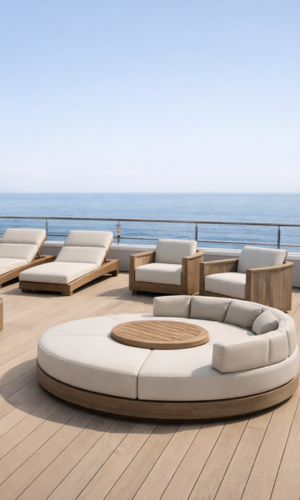
That said, curves need careful handling. In a compact courtyard, too many rounded pieces can reduce clarity and waste valuable floor area. In more generous landscapes or on broad yacht decks, however, curved modules and circular daybeds can create a quieter, more fluid rhythm. As ever, the trend works best when applied in response to the space rather than imposed upon it.
Comfort now looks more tailored
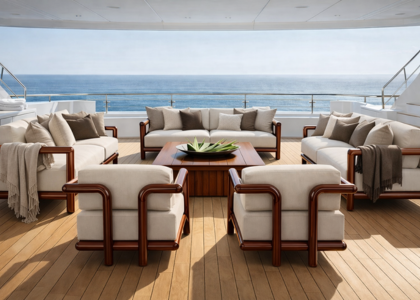
Comfort remains central, but its expression has become more sophisticated. Oversized cushions and obviously bulky upholstery are giving way to better-tailored forms with cleaner detailing. The effect is still luxurious, but more composed.
This is where craftsmanship matters. Well-made upholstered outdoor furniture should hold its shape, maintain crisp lines and age with dignity. For discerning clients, that balance between comfort and discipline is far more attractive than anything overfilled or visually heavy.
Material trends favour texture, restraint and longevity
The palette of outdoor furniture is becoming noticeably more nuanced. Rather than high-contrast combinations or glossy finishes, there is a move towards textured, tactile materials in quieter tones – chalk, sand, taupe, clay, bronze, weathered teak and soft mineral greys.
These finishes sit well against natural stone, lime render, timber cladding and muted planting schemes. They also allow the architecture and landscape to remain prominent. In luxury settings, this restraint often reads as more confident than furniture that calls attention to itself.
Ceramic and sintered stone tabletops continue to gain ground because they offer the visual depth of natural materials with strong practical performance. Powder-coated aluminium remains important for its durability and versatility, though the preferred finish is increasingly matt and finely grained rather than slick. Teak still holds its place, especially where warmth and Mediterranean character are desired, but it is often paired with more contemporary materials to avoid a traditional feel.
For coastal and marine environments, specification becomes even more exacting. Salt air, moisture and intense sun place different demands on frames, fixings and fabrics. What works beautifully in a sheltered country garden may be less convincing on a seafront terrace or yacht deck. The trend, then, is not only towards better-looking materials but towards materials chosen with much greater precision.
Mixed materials feel more bespoke
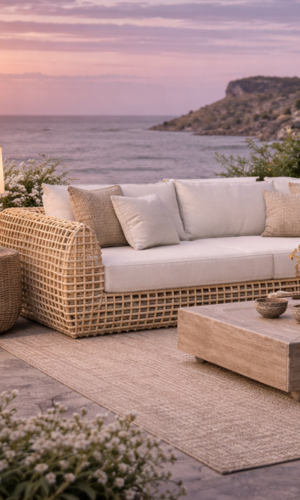
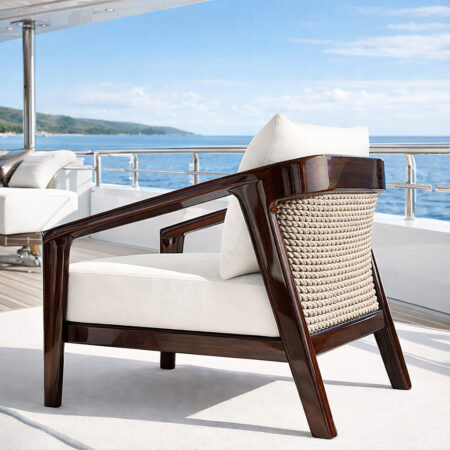
Another notable development is the rise of thoughtfully mixed materials. Rope detailing combined with teak, ceramic paired with metal, upholstery softened by timber accents – these combinations bring depth without excess.
When handled well, mixed materials make furniture feel bespoke and layered. When handled poorly, they can feel busy. The distinction usually comes down to editing. Limiting the palette and repeating key finishes across seating, dining and accessory pieces creates cohesion, which is especially important in larger residential or hospitality schemes.
Outdoor dining is becoming more residential in character
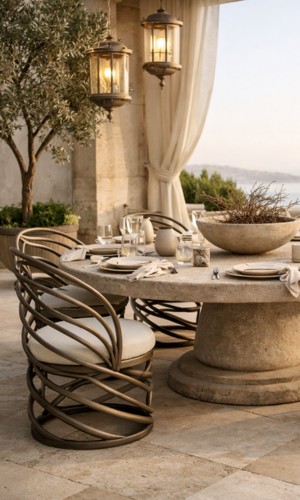
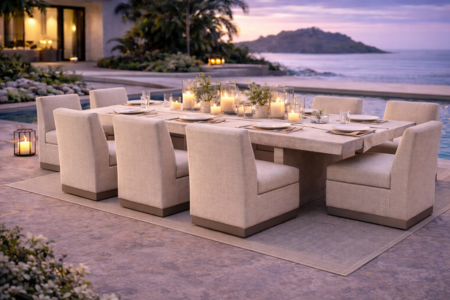
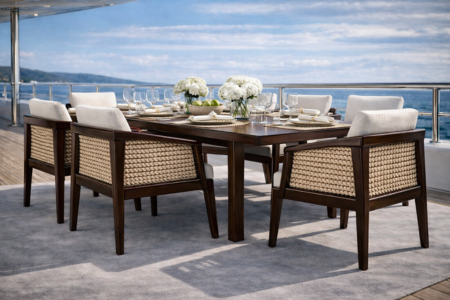
The formal outdoor dining set has evolved. Clients are moving away from generic tables and matching chairs towards arrangements that feel more akin to an interior dining room brought outside.
That means larger tables with richer surface finishes, dining chairs with more generous upholstery and layouts designed for lingering rather than quick seasonal use. There is also more interest in mixing chair styles at the head and sides of the table, or pairing benches with fully upholstered host chairs to create a less uniform atmosphere.
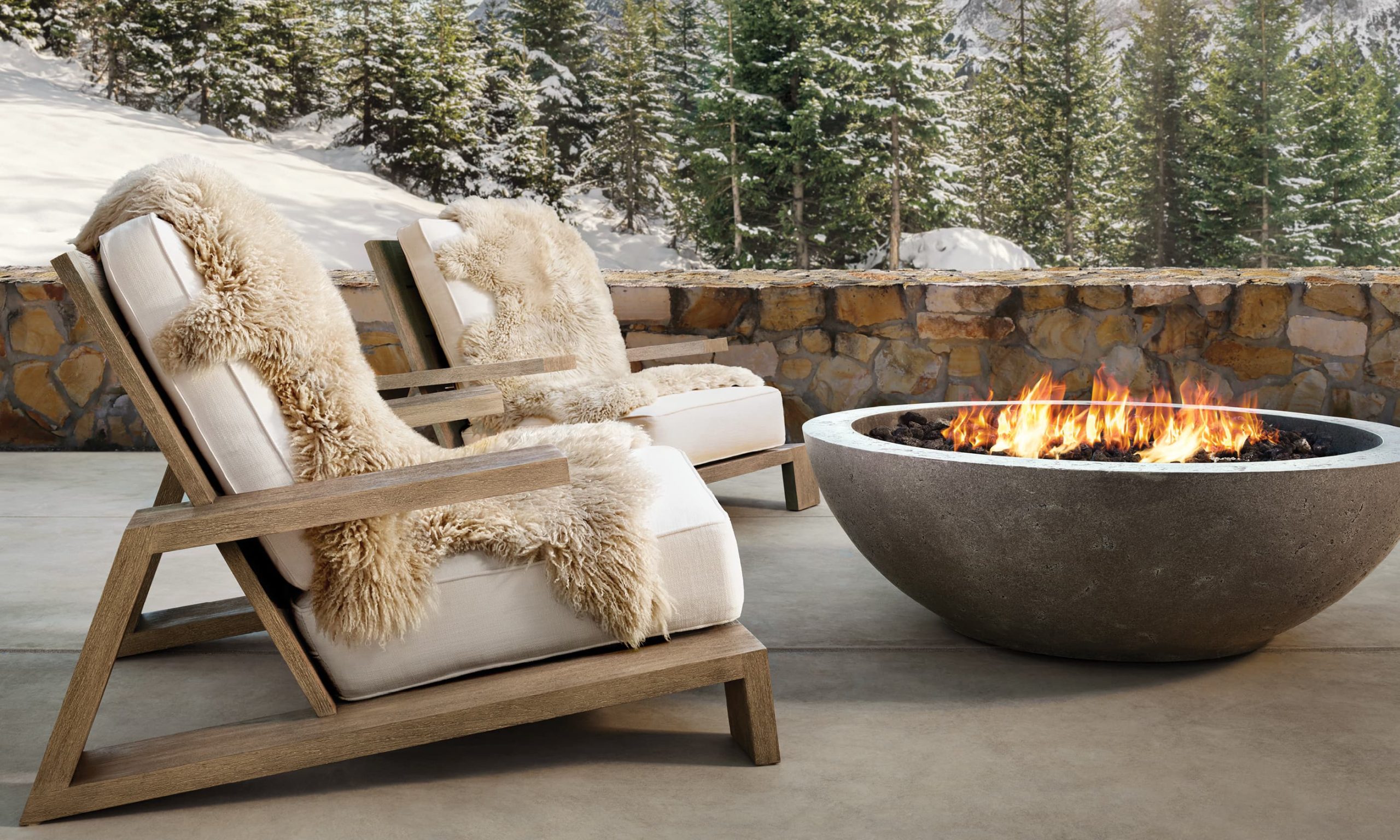
This trend reflects a broader shift in how exterior spaces are used. Outdoor kitchens, covered terraces and fire tables have extended the season, making al fresco dining a more established part of daily life. Furniture needs to support that shift. Pieces should be elegant enough for entertaining, resilient enough for exposure and comfortable enough for several hours at the table.
Modularity and bespoke specification are shaping luxury projects
Among the most significant outdoor furniture design trends is the move towards customisation. Standard dimensions and fixed finishes are often too limiting for exceptional spaces, particularly in projects where architecture, landscaping and joinery have all been tailored.
Modular seating allows for a more exact response to the site. A terrace may need a composition that frames a view without obstructing circulation. A hotel poolside may require repeating modules that feel consistent but not repetitive. A yacht deck may call for marine-grade construction in very precise dimensions. In each case, flexibility is not an indulgence. It is what enables coherence.
This is also changing the way clients think about investment. Rather than purchasing outdoor furniture as a replaceable category, they are specifying it more like fitted architecture – something chosen to suit a particular environment and expected to endure. For brands such as Eden Profile, that project-led approach is central to the appeal.
Statement pieces are quieter than they used to be
There is still room for impact, but the nature of the statement piece has changed. Instead of bright accent colours or overtly decorative frames, emphasis is now placed on scale, silhouette and material confidence.
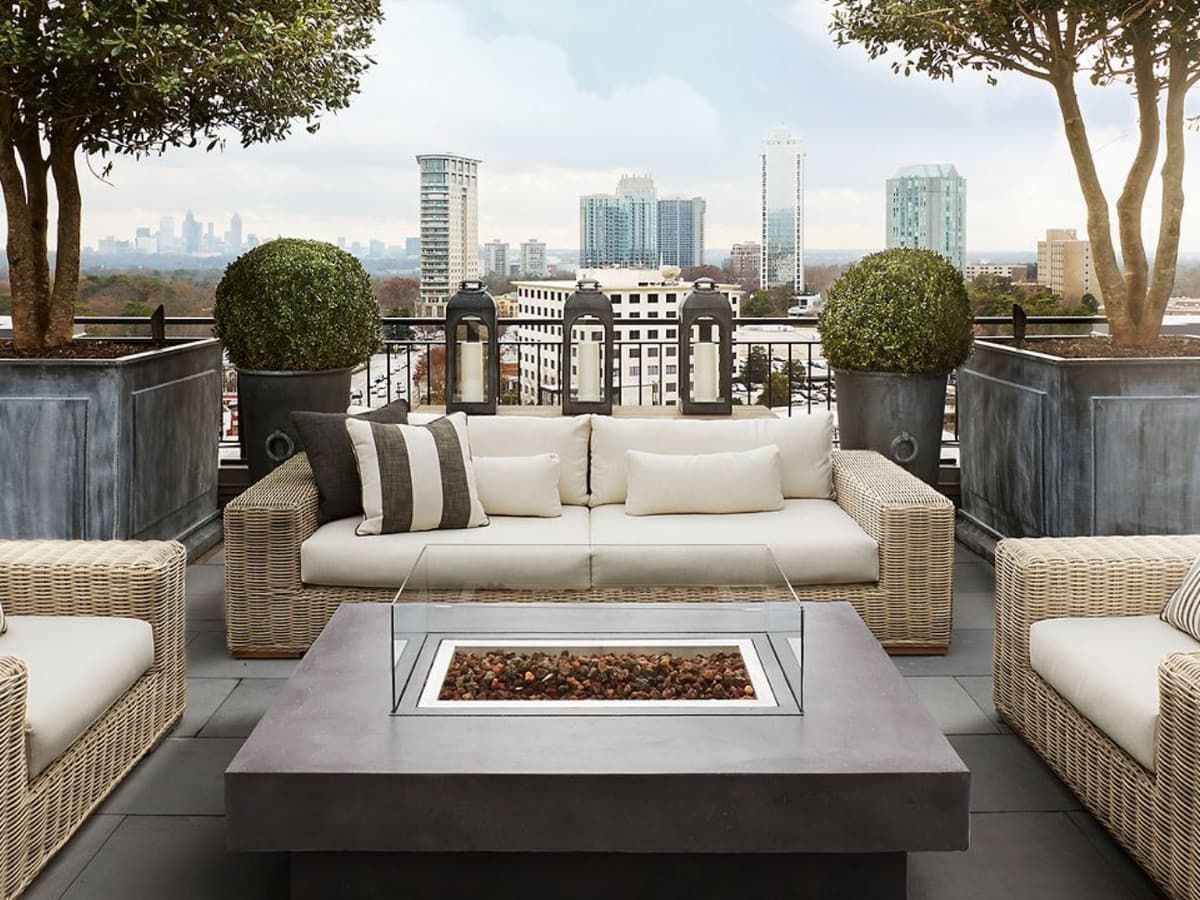
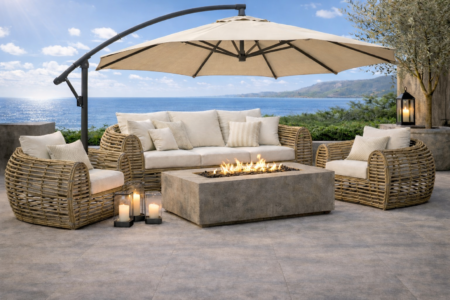
A beautifully proportioned daybed, an extra-long dining table, a low fire table in a refined finish or an umbrella with tailored detailing can become the focal point without disturbing the wider scheme. This feels more aligned with current luxury sensibilities. Prestige is expressed through discretion, not noise.
Colour, when used, tends to be controlled. Deep olive, rust, charcoal and muted navy are appearing more often, though usually as grounded accents rather than dominant themes. Neutrals remain the foundation because they allow spaces to evolve through planting, textiles and light.
The best trends are the ones that age well
Trend awareness has its place, but the most successful outdoor settings are not assembled to look current for a single season. They are composed to feel relevant for years, sometimes decades. That usually means choosing forms with clarity, materials with integrity and finishes that sit naturally within the architecture.
The real direction of the market is not towards more, but towards better. Better proportion. Better comfort. Better materials. Better alignment between exterior furniture and the setting it inhabits.
For homeowners and design professionals alike, that is the useful question to carry forward: not whether a piece feels fashionable, but whether it makes the space feel complete.